


First-Party Data Integration: Key Findings
Google’s cookie policy backtracked from a full phase-out, but Chrome now lets users control tracking preferences.
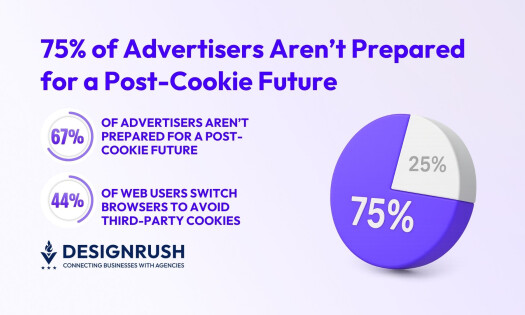
User privacy actions show 67% disable cookies or tracking, and 44% switch browsers entirely.
First- and zero-party data build trust through voluntary sharing, offering accuracy and long-term customer goodwill.
When Google first announced plans to phase out third-party cookies in 2020, it forced marketers to rethink everything they knew about data.
While the company has since softened its approach, Chrome’s move to a user-controlled privacy model marks a lasting shift in how brands can track and engage audiences online.
This shift is especially significant, as 67% of US adults turn off cookies or website tracking as a way to manage their online privacy, according to data from Pew Research Center published in 2024 by eMarketer.
As these numbers clearly illustrate, consumers have much more control over their online privacy in 2025, and that’s unlikely to change anytime soon.
All of this means that the data strategy that marketers once relied on is unraveling, which is a problem for any company that still has all its eggs in that third-party cookie basket.
This is why top web design agencies like Web Loft Designs are pushing for a new currency: first-party data.
Why First-Party Data Is the New Gold Standard
Unlike third-party data, which comes from external sources, first-party data is collected directly from customers through your owned channels, such as:
- Your website: Navigation patterns, clicks, etc.
- Email and CRM records: Contact information, preferences, past purchases
- Loyalty programs: Repeat engagement and transaction history

This means the data collected is raw, yet reliable, and rooted in real customer interactions.
First-party data works primarily because it was given voluntarily and with the right context.
So whenever someone decides to sign up for a loyalty program or exchanges their email for a copy of your whitepaper, they actively choose to trust you with their information.
“The value of first-party data is that it allows brands to build an ongoing dialogue with their audience.
When someone willingly hands you their data, they are essentially saying, ‘I want you to know me better.’
That’s a completely different starting point compared to when we were using third-party cookies,” said Marina Marsh, president at Web Loft Designs.
Ultimately, the strength of this model is that it offers both sides a win-win.
Brands obtain valuable customer data that is accurate, ethically sourced, and highly sustainable.
Meanwhile, customers benefit from personalized experiences that actually provide the value they want and need.
Put First-Party Data to Work
Collecting first-party data is only half the job. The real work is in how brands use the first-party data they’ve gathered to drive growth.
There are three ways you can better incorporate first-party data into your marketing strategy:
1. Centralize It in Your CRM
Start by making your CRM the ultimate source of truth for data. Pipe web forms, checkout data, loyalty IDs, and the like into a single profile, so every touchpoint tells the same story.
Also, standardize fields, dedupe records, and set rules for owners for all teams involved so no one argues whose data set is “correct.”
2. Segment Based on Behavior
Segmentation is most effective when it reflects customers’ behaviors, rather than just age or geography.
Group people by patterns like recency, frequency, or value. For example, launch sets like “new vs returning customers” or “high-value vs at-risk.”
Then, build programs (welcome, re-engagement, etc.) that trigger automatically based on these criteria.
3. Invite Zero-Party Data Directly
While first-party data tells you what customers do, zero-party data tells you what they want.
Quizzes and surveys allow people to hand over their data, like what they hope to buy next or even how often they want updates from you, directly and voluntarily.
That’s why these two go hand-in-hand in any successful data strategy. Zero-party data can be used to strengthen insights you’ve already gathered through first-party data, eliminating costly guesswork.

Build Equity Through Data
Collecting data used to be treated as if it were an oil mining operation, where data was extracted, refined, and then burned for growth.
In 2025, that metaphor falls flat because, with third-party cookies falling out of favor, data has now become a relationship with customers that needs to be maintained.
When people hand over their browsing history and personal preferences, they are extending trust towards the companies they interact with.
What This Means for 2025 and Beyond
With consumer privacy preferences hardening and third-party tracking options narrowing, brands that lean into first- and zero-party data will lead the next era of digital personalization.
What’s the key? In our book, it’s building ecosystems of trust, where every click, opt-in, and feedback loop becomes a competitive advantage.
link