
Without a clear and actionable lead generation strategy, agencies may struggle to attract new clients or grow their businesses. Below are the top five strategies that marketing agencies can use to boost lead generation efforts, why each strategy works, and how to implement them effectively.
Lead Generation for Marketing Agencies: Key Points
Agencies with structured lead generation pipelines report 15–28% higher growth and a 68% higher account win rate when using a formal ICP.
Webinars have a 57% live attendance rate and are ranked among the top formats for generating qualified leads by B2B marketers.
Referral leads convert up to 5x more effectively, and 70% of marketers say they deliver the lowest cost per lead.
Why Do Marketing Agencies Need a Formal Lead Generation Process?
A formal lead funnel will help you grow faster and more profitably. In fact, agencies with structured pipelines report 15%-28% higher growth.
By contrast, chaotic or ad hoc processes leave huge gaps: roughly 80% of new leads never convert into customers if they aren’t systematically nurtured.

Explore The Top Digital Marketing Agencies
Agency description goes here
Agency description goes here
Agency description goes here
Launch with a Strategic Foundation
Before diving into tactics like SEO or paid ads, every marketing agency needs to set a clear strategic foundation.
Why? Because not all leads are worth pursuing — in fact, research shows that up to 50% of prospects aren’t a good fit for your services.
Without a focused approach, you may waste time, budget, and energy chasing the wrong opportunities.
Why It Works
 A strategic foundation ensures your lead generation system is aligned with the right audience, messaging, and market position from day one.
It helps you prioritize quality over quantity — and turns your sales process into a growth engine rather than a guessing game.
How To Implement It?
- Define your ideal customer profile using firmographic and psychographic criteria.
- Focus on the companies you serve best to boost win rates.
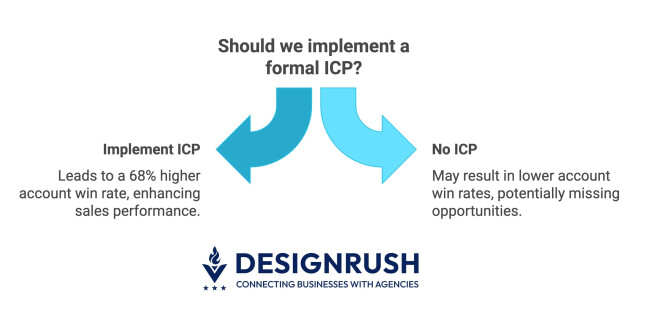
- Companies with a formal ICP see about a 68% higher win rate.
- Craft a value proposition with a measurable outcome.
- Say things like “Grow qualified leads by 30% in 90 days.”
- Clear promises work better than vague claims.
- Pick your top 2–3 competitors to benchmark.
- Study their positioning, channels, and strengths.
- Use that insight to stand out.
Desireé Duffy, Founder and CEO of Black Château, emphasizes that any brand should be thinking about their ideal customer.
She shared on the DesingRush podcast that, “What you really want to do is visualize the ICP. It will help your copywriter speak to your target demographic in their voice, assist your ads manager with geo-targeting, and allow your designer to create graphics that speak to your audience’s tastes.”
Execute Personalized LinkedIn Outreach and Thought Leadership
For B2B marketing agencies, LinkedIn remains one of the most powerful channels for high-quality lead generation.
But success doesn’t come from mass outreach or generic content. It requires a personalized, data-driven, and insight-led approach that builds trust and opens up real conversations with decision-makers.
Why It Works
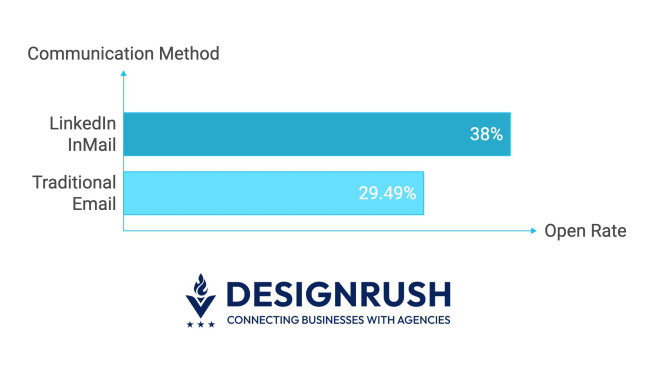 According to The B2B House, LinkedIn InMail open rates average around 38% — significantly higher than traditional email open rates. And when outreach is supported by relevant content and thought leadership, your credibility rises long before a sales call is booked.
How To Implement It?
- Use Sales Navigator or LinkedIn’s built-in search to filter by job title, industry, location, and company headcount.
- Focus on decision-makers: founders, CMOs, heads of growth, etc.
- Save leads into lists so you can build and track outreach sequences.
- Prioritize shared connections or mutual interests to increase response rates.
- Avoid hard selling. Lead with insights, not asks.
- Mix post types: insights, polls, carousels, or quick video explainers.
- Track metrics: aim for 3–4% engagement and monitor how content influences inbound connection requests or replies.
As Nemanja Živković, CEO of Funky Marketing, explains: “You should know what you stand for, what you offer — meaning clarity and authenticity. Because when we’re talking about thought leadership, the key often gets overlooked: we actually have original thoughts and a new perspective on an existing problem.”
Živković emphasizes that effective B2B LinkedIn marketing isn’t about broadcasting — it’s about fostering real conversations.
He concludes: “Content should be seen as a form of conversation… sharing insights that spark engagement — whether it’s in the form of questions, addressing industry challenges, or offering predictions.”
Host Webinars and Virtual Events to Nurture High-Intent Leads
Webinars and virtual events are powerful mid-funnel assets that give your prospects a direct, interactive experience with your expertise.
Why It Works
Webinars help build trust at scale and move high-intent leads further down the pipeline.
According to ON24, about 57% of webinar registrants attend live, and B2B marketers consistently rank webinars among the top content formats for generating qualified leads.
Why? Because unlike passive content, webinars are participatory — they position your agency as a problem-solver in real time.
How To Implement It?
- Interview clients or review sales calls to uncover recurring pain points.
- Frame your title around specific outcomes or urgent needs.
- Distribute on LinkedIn: Use organic posts and Sponsored Content to reach ideal roles.
- Send email invites to past leads, newsletter subscribers, and event attendees.
- Run retargeting ads on Facebook, Google, or LinkedIn to catch past site visitors.
- Send automated reminder emails.
- Include calendar links and clear join instructions.
- Consider offering a live-only bonus to encourage attendance.
- Send a post-event email sequence (3–5 emails) over the following week.
- Segment messaging based on attendance (e.g., attendees vs. no-shows).
- Use personal follow-ups from the host or sales lead to engage top prospects.
Receive proposals from top digital marketing firms. It’s free.
GET STARTED
Activate Referral and Partnership Channels
Not every lead has to come from cold outreach or paid ads. Sometimes, your best prospects are just one introduction away.
Referral and partnership programs tap into trust-based networks and generate high-converting, low-cost leads.
Why It Works
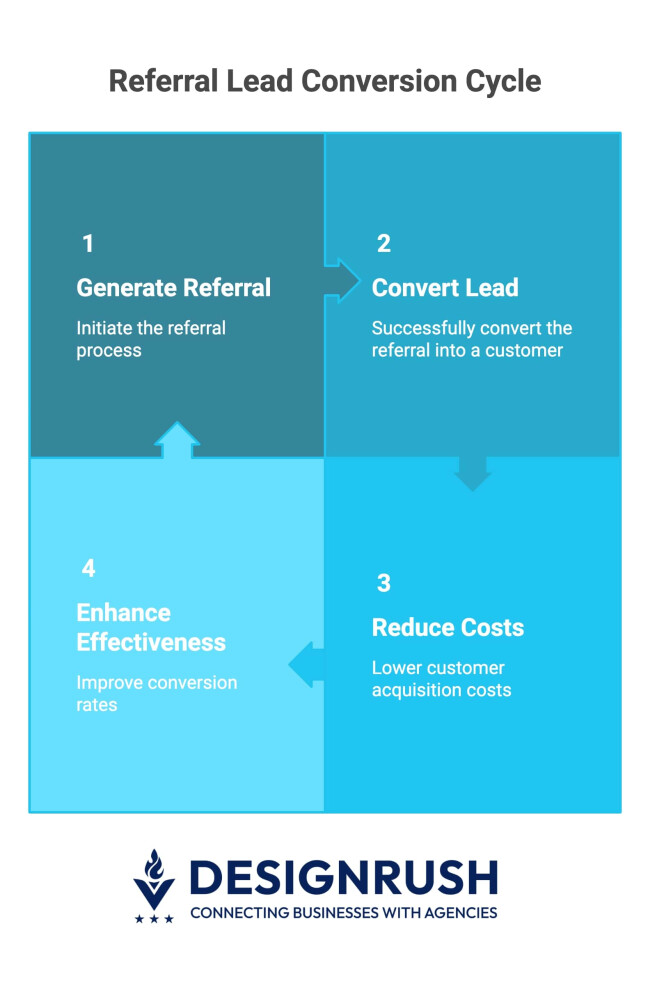
Referral-based leads convert up to 5x more effectively than cold leads and typically come with lower customer acquisition costs. In fact, 70% of marketers report referrals have the lowest CPL of any channel.
And when you combine that with strategic partnerships, you’re not just expanding reach, but you’re building a repeatable, collaborative lead gen engine.
How To Implement It?
- Design your offer: Choose a clear incentive structure:
- 10% revenue share
- Flat-rate referral fee
- Service credit or bonus perks
- Gift cards for qualified intros
- Make it easy to refer:
- Provide shareable referral links
- Include simple referral forms
- White-label assets or talking points for partners
- Promote internally: Remind current clients (especially satisfied ones, post-delivery) that you have a referral program. Equip your team to ask for referrals at key milestones (like after results are delivered).
Automate, Score, and Measure for Scalable Pipeline Management
Attracting leads is only half the battle. Turning them into revenue requires a well-structured, data-driven system.
Without automation, scoring, and clear metrics, even strong lead generation efforts can break down under scale.
Here’s why each step matters and how to put it into practice.
Automate Lead Capture and Nurturing With the Right Tools
Choose tools that integrate well with each other, match your agency’s size, and scale with your needs.
|
Tool Type |
Recommended Platforms |
Primary Use Case |
|
CRM |
HubSpot CRM, Pipedrive, Zoho CRM, Salesforce |
Lead capture, deal tracking, activity history, pipeline view |
|
Email Nurturing |
ActiveCampaign, ConvertKit, Lemlist |
Automated drip campaigns, segmented outreach, follow-up emails |
|
Data Enrichment |
Clearbit, Apollo.io, ZoomInfo |
Append firmographic data (company size, industry, revenue) |
|
Reporting |
Databox, Looker Studio, HubSpot Reports |
Visualize performance metrics, KPIs, attribution |
Create a Lead Scoring Model to Prioritize Outreach
A well-designed lead scoring model ensures your team focuses on prospects who are most likely to convert based on fit and behavior.
This improves conversion rates and reduces wasted effort.
|
Lead Scoring Criteria |
Example Point Value |
|
Industry matches ICP |
+10 |
| Job title is decision-maker |
+15 |
| Company size (ideal range) |
+10 |
| Downloaded a lead magnet |
+5 |
| Attended a webinar |
+10 |
| Clicked email CTA |
+5 |
| Booked a meeting |
+20 |
| Unsubscribed or bounced email |
-10 |
- Set a threshold (e.g., 40+) for Marketing Qualified Leads (MQLs) to be handed off to sales.
- Adjust scores based on actual conversion patterns (e.g., webinar attendance may predict higher deal velocity than email clicks).
- Review monthly to refine based on closed-won data.
Scoring adds a layer of focus, helping agencies scale intelligently without burning out the team.
Track Pipeline KPIs to Improve and Forecast Performance
What gets measured gets managed. KPIs help you identify bottlenecks, test new strategies, and forecast revenue with accuracy.
Without metrics, it’s impossible to know what’s working or where leads drop off.
|
Pipeline KPI |
What It Measures |
|
Cost Per Lead (CPL) |
Efficiency of paid and organic campaigns |
| Lead-to-MQL Conversion Rate |
Effectiveness of lead scoring and targeting |
| MQL-to-SQL Conversion Rate |
Sales-readiness of qualified leads |
| Pipeline Velocity |
Speed at which leads move from first contact to close |
| Lead Source Attribution |
Which channels are generating the most revenue |
- Visualize these KPIs in dashboards.
- Use attribution modeling to evaluate campaign ROI.
- Conduct monthly pipeline reviews to recalibrate messaging, lead sources, and follow-up sequences.

Our team ranks agencies worldwide to help you find a qualified partner. Visit our Agency Directory for the top digital marketing companies, as well as:
- Top Lead Generation Companies
- Top B2B Lead Generation Agencies
- Top Marketing Strategy Agencies
- Top AI Marketing Companies
- Top Social Media Marketing Agencies
Our design experts also recognize the most innovative design projects across the globe. Given the recent uptick in social media video production, you’ll want to visit our Awards section for the best & latest in social media videography designs.
We’ll find qualified digital marketing firms for your company, for free.
CLICK HERE
Lead Generation for Marketing Agencies FAQs
1. What lead gen strategy brings the fastest results?
Paid search ads and targeted LinkedIn outreach typically yield the quickest feedback and leads. Search ads capture prospects actively looking for solutions, and LinkedIn outreach starts generating replies as soon as campaigns run.
2. What’s the ideal lead scoring model?
Start simple: a rule-based model combining firmographic and behavioral signals works well for early-stage agencies. As your data grows, you can refine scores or adopt predictive scoring for more nuance.
3. How often should I revise my ICP?
Review your ICP at least quarterly. Markets evolve and your best-fit client profile might shift. Analyze which leads and clients are closing, track campaign performance, and solicit feedback from sales. This regular check lets you tweak the ICP criteria so your targeting stays aligned with where you’re getting traction.
link